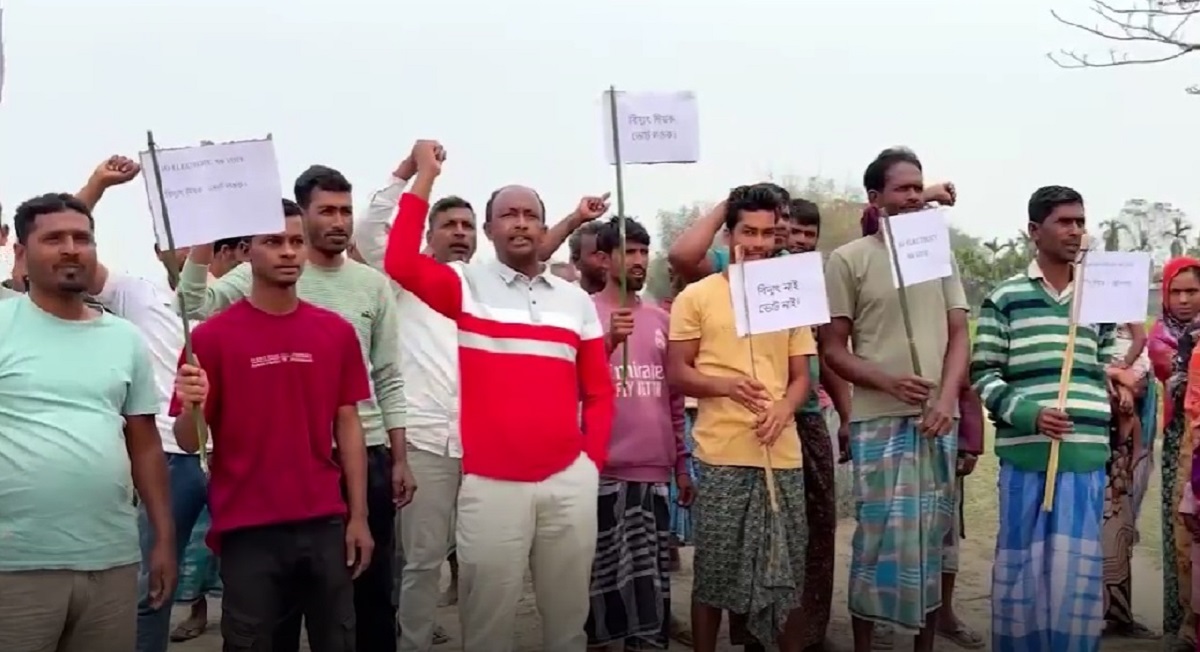
Nearly eight decades after India’s Independence, a remote village along the Assam–West Bengal border continues to remain in complete darkness. Residents of Garumarachor village in the Bodoland Territorial Region (BTR) have erupted in protest over the total absence of electricity, raising the slogan “No Electricity, No Vote” ahead of the upcoming elections.
Garumarachor is located under the No. 3 Council Constituency of Kokrajhar district in the Bodoland Territorial Region. Despite repeated claims by the Centre about universal village electrification across the country, the village remains off-grid, with no access to regular power supply since Independence. The situation starkly contrasts official records that suggest every village in India has been electrified.
Men and women from the village recently took to the streets, holding placards and raising slogans demanding immediate electrification. At a public gathering, residents declared in unison that political leaders should first ensure electricity reaches their homes before seeking votes. The villagers collectively resolved to boycott the upcoming polls if their long-standing demand for power connectivity is not met.
For most families in Garumarachor, hurricane lanterns and kerosene lamps are still the only reliable sources of light. Children continue to study under dim oil lamps, struggling against darkness as they pursue their education and aspirations for a better future. A small number of relatively better-off households have installed private solar panels to manage basic lighting needs, but the majority of homes remain entirely without electricity.
Garumarachor village No. 2 falls under the Gossaigaon Electrical Subdivision, yet grid connectivity has never been extended to the settlement. With elections drawing closer, attention is now focused on the government and the concerned departments to see whether urgent steps will be taken to electrify the village or whether the residents will carry out their threat of an electoral boycott.
The unfolding situation has once again highlighted the gap between policy declarations and ground realities in some of the most remote corners of the country.