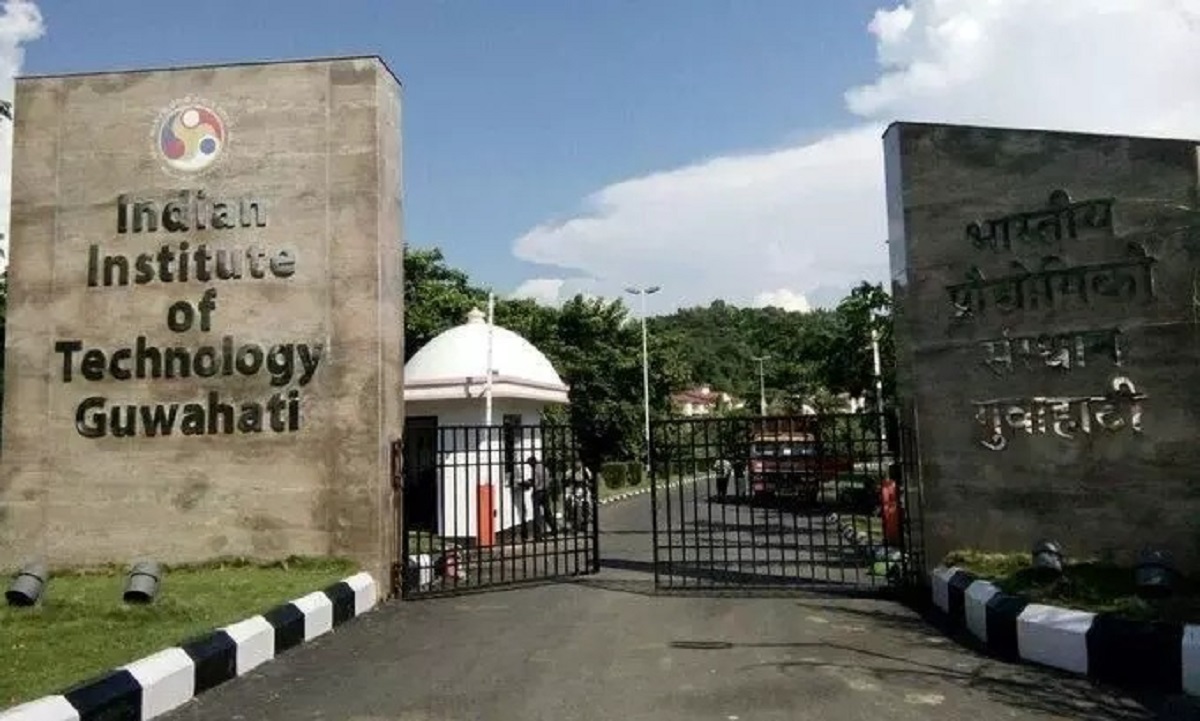
Researchers at Indian Institute of Technology Guwahati have developed a new radiation-resistant cement mortar that can make nuclear facilities safer by strengthening structural materials and improving their ability to block harmful radiation.
The newly developed microparticle-enhanced cement mortar has demonstrated improved radiation shielding capabilities while also increasing the durability and structural strength of concrete used in nuclear installations. The innovation aims to help nuclear facilities maintain stronger protective barriers against radiation leaks.
The research focuses on modifying the composition of conventional cement mortar so that it can function both as a structural component and as an effective radiation-shielding barrier. By increasing the density and durability of the mortar, the researchers were able to significantly reduce the penetration of radiation through concrete structures.
According to the researchers, concrete made using the enhanced mortar can reduce the risk of radiation leakage, thereby improving safety in sensitive locations such as nuclear reactors and radiation-handling facilities. The material could help create stronger containment walls and structures in areas where radiation exposure must be strictly controlled. It may also support long-term safety by maintaining shielding performance over extended periods.
Global nuclear incidents such as the Chernobyl disaster in 1986 and the Fukushima nuclear accident in 2011 have highlighted the importance of radiation safety in nuclear energy systems. The safety of nuclear power plants largely depends on the strength and resilience of the materials used in containment structures, which act as barriers to prevent radiation leaks during extreme events such as earthquakes, explosions or sudden temperature changes.
To address this challenge, the research team modified cement mortar by incorporating four types of microparticles—boron oxide, lead oxide, bismuth oxide and tungsten oxide. These materials were added in small quantities to evaluate their effect on the mortar’s compressive strength after 28 days and to assess their ability to block mixed radiation fields containing gamma rays and neutrons.
The experiments revealed that each microparticle contributed differently to the mortar’s properties. Lead oxide helped increase the density and compressive strength of the mortar, while tungsten oxide improved resistance to cracking, enhancing durability. Boron oxide significantly improved radiation shielding performance, while tungsten oxide also provided broad-spectrum protection against multiple types of radiation.
Explaining the significance of the research, Hrishikesh Sharma, Associate Professor in the Department of Civil Engineering at IIT Guwahati, said the safety of nuclear infrastructure depends heavily on how containment materials perform under extreme mechanical stress and radiation exposure. He noted that the study demonstrates how carefully engineered microparticle-modified cement mortar can significantly enhance both structural strength and radiation shielding capacity.
The findings provide a roadmap for developing next-generation cement-based materials suitable for nuclear power plants, small modular reactors and medical radiation facilities. By improving resistance to heat, structural loads and radiation, the material could contribute to the development of safer and more resilient nuclear infrastructure.
The research findings were published in the international journal Materials and Structures. The study was co-authored by Prof. Sharma and his research scholar Sanchit Saxena of IIT Guwahati, in collaboration with Suman Kumar from the Heritage and Special Structures Department of CSIR-Central Building Research Institute, Roorkee.
Looking ahead, the research team plans to scale up the developed mortar into a full concrete mix design and conduct structural-level testing of reinforced concrete elements incorporating the material. The team is also working on optimising the dosage of microparticles to achieve the ideal balance between strength, durability, workability and radiation shielding performance.
The researchers are exploring collaborations with nuclear energy agencies, construction material manufacturers and infrastructure companies to test the developed mortar under simulated field conditions and pilot-scale applications.