In a landmark effort to preserve and promote indigenous wisdom, Kaziranga Park authorities with support from Assam State Biodiversity Board (ASBB) and Assam Project on Forest & Biodiversity Conservation (APFBC) Phase II projects have documented over 150 tradeable natural resources deeply embedded in the Traditional Ecological Knowledge (TEK) of communities living on the fringes of Kaziranga National Park and Tiger Reserve. This comprehensive documentation underscores the vital role of high-biodiversity areas in nurturing key habitats for these resources, which form the backbone of daily livelihoods for local communities.
These semi-wild resources—ranging from seasonal fruits and vegetables grown in fields, orchards, and chapori (riverine) lands to medicinal plants and fibers—thrive in Kaziranga’s unique ecosystems. Beyond their practical value, they hold profound sacred and spiritual significance, linking communities to their ancestral landscapes and cultural heritage. The project documented over 150 species of plants and other biological resources across forest-fringe villages spanning three Wildlife Divisions in the Kaziranga landscape. Over 178 households and 361 community members from Mising, Karbi, Bodo, Adivasi, Assamese and Nepali communities shared their traditional ecological knowledge on food, medicine, crafts, rituals and coexistence with wildlife, which has been woven into the visual and narrative fabric of the volume.
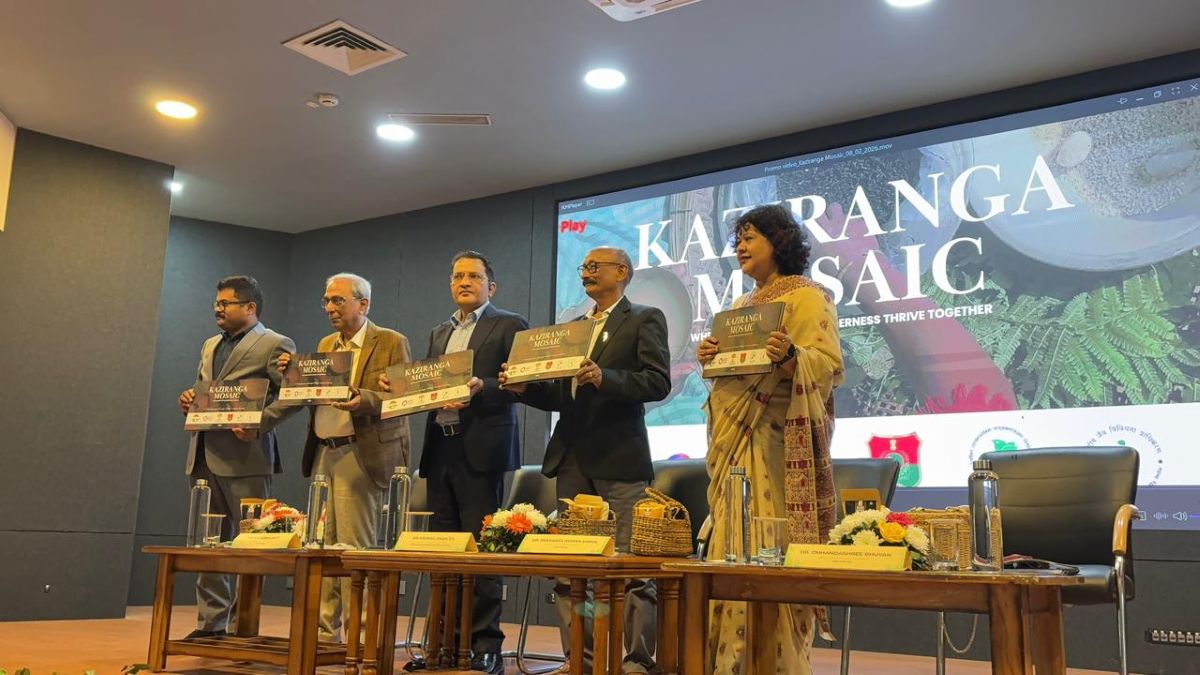
The coffee table book titled KAZIRANGA MOSAIC: Where Communities and Wilderness Thrive Together” and short video were formally launched by Shri Anurag Singh, IFS APCCF & Member Secretary ASBB in presence of Dr. S. K. Borthakur, Retd. Professor of Gauhati University, renowned Plant Taxonomist of Assam; Dr. P. K. Saikia, Retd. Professor, and HoD of Zoology, Gauhati University ; Dr. Chanddhashree Bhuyan, Professor of Zoology, Arya Vidyapeeth College (all members ASBB) along with Shri Arun Vignesh CS, IFS Deputy Director Kaziranga TR during the State Level Stakeholders’ Awareness Workshop on implementation of the Biological Diversity Act, 2002 (as amended in 2023) and Access and Benefit Sharing mechanism, held at the Auditorium of NEDFi House, Ganeshguri, Guwahati, on 10 February 2026.
“Documentation is the crucial first step in acknowledging and valorizing TEK,” said Dr Oinam Sunanda Devi, Scientific Officer, Assam State Bioidversity Board.
By recognizing these resources, we pave the way for economic empowerment through measures like Geographical Indication (GI) tagging, which can boost sustainable trade, create livelihoods, and conserve biodiversity and we shall be actively taking up the same as next steps”said Dr Sonali Ghosh, IFS Field Director Kaziranga Tiger Reserve.
The next phase of this project will focus on exploring the potential for securing Geographical Indication (GI) tagging for select community-based products from the Kaziranga landscape. Particular emphasis will be placed on traditional items such as Maduri and Hugul mats, as well as Meteka and Birina crafts, which embody the region’s distinctive ecological heritage and cultural identity. This process is expected to enhance recognition, protection and market value for these nature-linked livelihoods, while encouraging continued stewardship of local bioresources and traditional knowledge. Speakers emphasised that by documenting these bioresources and associated knowledge systems in the forest fringes, “Kaziranga Mosaic” recognises local residents not merely as stakeholders but as co‑authors of Kaziranga’s future, and called for its wide use in training, outreach and community‑based conservation initiatives across Assam.