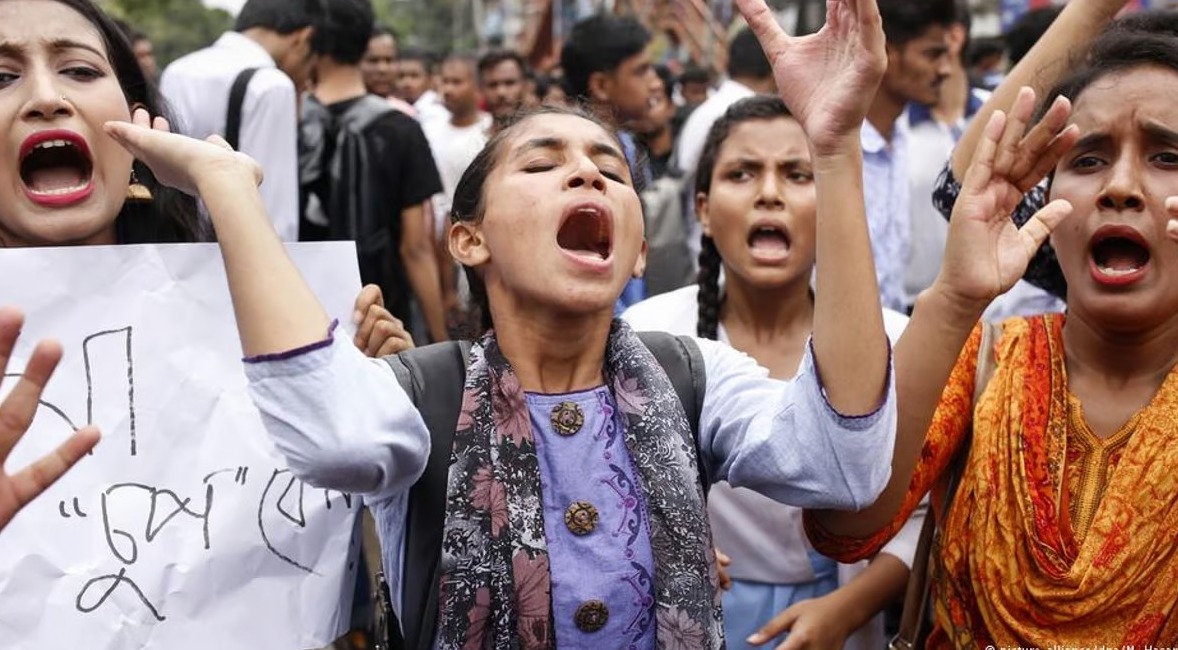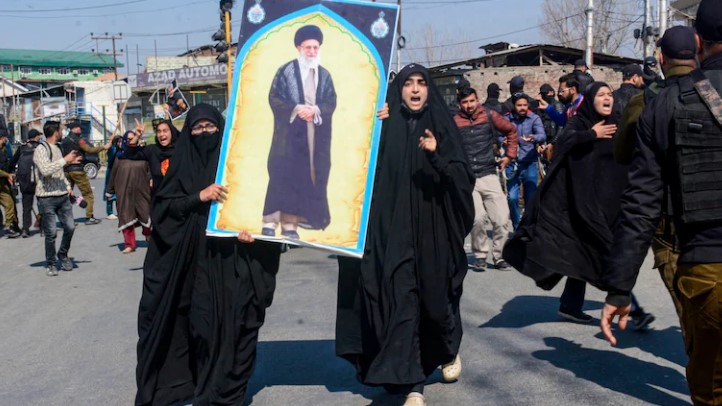
The Kashmir Valley has been gripped by widespread mourning and spontaneous protests following the confirmed death of Iran’s Supreme Leader, Ayatollah Ali Khamenei, in a joint U.S.-Israeli airstrike in Tehran. Since Sunday, thousands of people—primarily from the Shia community but joined by many Sunnis—have flooded the streets of Srinagar, Budgam, and Baramulla, chanting anti-U.S. and anti-Israel slogans while carrying black flags and portraits of the fallen leader. The local administration has heightened security and closed schools for two days as a precautionary measure, though many areas have observed a voluntary shutdown in solidarity. Top Shia clerics in the region have declared 40 days of official mourning, reflecting the deep spiritual and emotional connection the Valley has with the Iranian leadership. The protests reached their peak at Srinagar’s historic Ghanta Ghar, where mourners engaged in traditional chest-beating rituals, describing Khamenei’s death not just as a political loss, but as the “martyrdom of a guardian.”
For Shia Muslims in Kashmir and globally, Ayatollah Khamenei held a status far beyond that of a political head of state; he was a Marja-e-Taqlid, or a “Source of Emulation.” In Shia jurisprudence, a Marja is the highest-ranking authority whom followers look to for guidance on every aspect of daily and spiritual life. Having led the Islamic Republic since 1989, Khamenei was viewed as the standard-bearer of “Resistance” against Western influence and a protector of Shia interests worldwide. His influence in Kashmir was particularly unique, rooted in his 1980 visit to Srinagar, which established a lasting legacy of religious and cultural affinity. To his followers, he represented the continuity of the 1979 Islamic Revolution and the embodiment of the “Path of Karbala,” emphasizing social justice and defiance against perceived oppression. As the region navigates this period of mourning, the sheer scale of the demonstrations in Kashmir underscores how his theological authority served as a unifying pillar for the community, transcending international borders