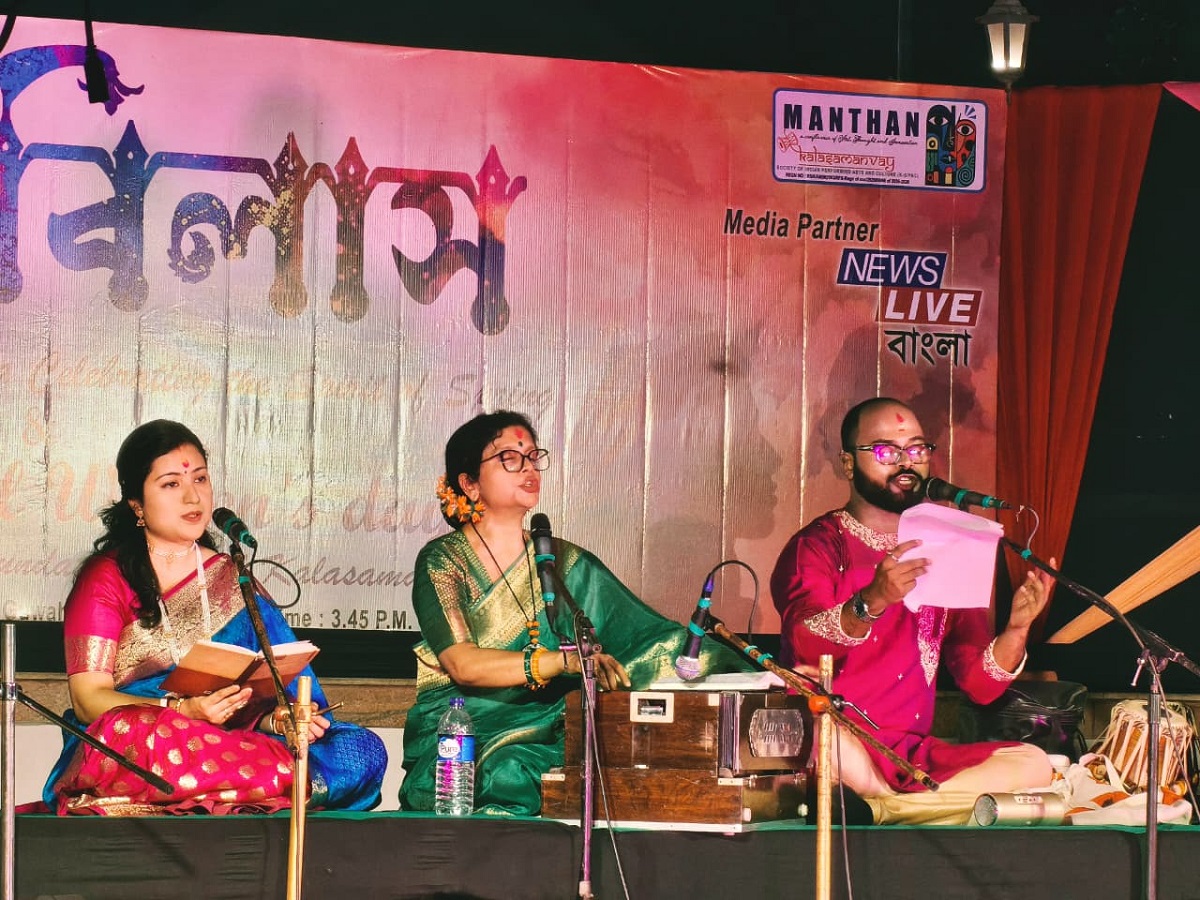
International Women’s Day was celebrated with colour and creativity at Atal Udyan in Adabari, Guwahati, where Kolasamanway organised a vibrant programme titled Basantabilas. The event combined discussions, music, poetry, and dance to honour womanhood while welcoming the spirit of spring.
Physician Dr. Sadhan Das, the chief guest of the programme, spoke about the deeper meaning of spring and life. He said that spring symbolises renewal and new beginnings, while India’s six seasons remind people of life’s fleeting nature. Reflecting on his experience as a doctor, he remarked that if one truly calculates the meaningful time available in life, it is surprisingly limited—perhaps around 600 hours. Therefore, he emphasised the importance of living life with purpose and harmony rather than wasting it in conflict and negativity.
Gynaecologist and paediatrician Dr. Rita Bhuiya raised concerns about persistent gender inequality in society. She noted that despite progress in education and modern thinking, discrimination against girls still exists. According to her, the reactions outside delivery rooms often reveal whether a newborn is a boy or a girl. She added that some families still try to determine the baby’s sex before birth, and in certain cases even consider abortion if the child is female, which she described as deeply troubling.
Writer Manikuntala Bhattacharya said that although Women’s Day is celebrated every year with discussions and speeches, meaningful change in society remains slow. Quoting author Maxim Gorky, she said a capable mother shapes responsible citizens. However, she pointed out that even when equality is discussed publicly, silent discrimination often exists within families. She suggested that girls should learn martial arts for self-defence and develop the confidence to face social challenges. She also stressed the need for women to become financially independent and strong enough to break barriers and challenge superstition.
Professor Sudeshna Bhattacharya of Gauhati University referred to examples from the Brihadaranyaka Upanishad, noting that in ancient India women and men studied together. She questioned how later practices such as purdah, restrictions on women’s education, and other discriminatory customs emerged in society. Understanding this history, she said, is essential to address present-day inequality.
The second part of the event featured a cultural evening titled Phaguner Mohonay, celebrating spring through folk rhythms. Performances included songs, poetry, Kathak dance by Nrityarpan, children’s group dance, and classical music presentations. The programme concluded with Ayorī Basanta, a special performance portraying the festive spirit of Holi, leaving the audience captivated.