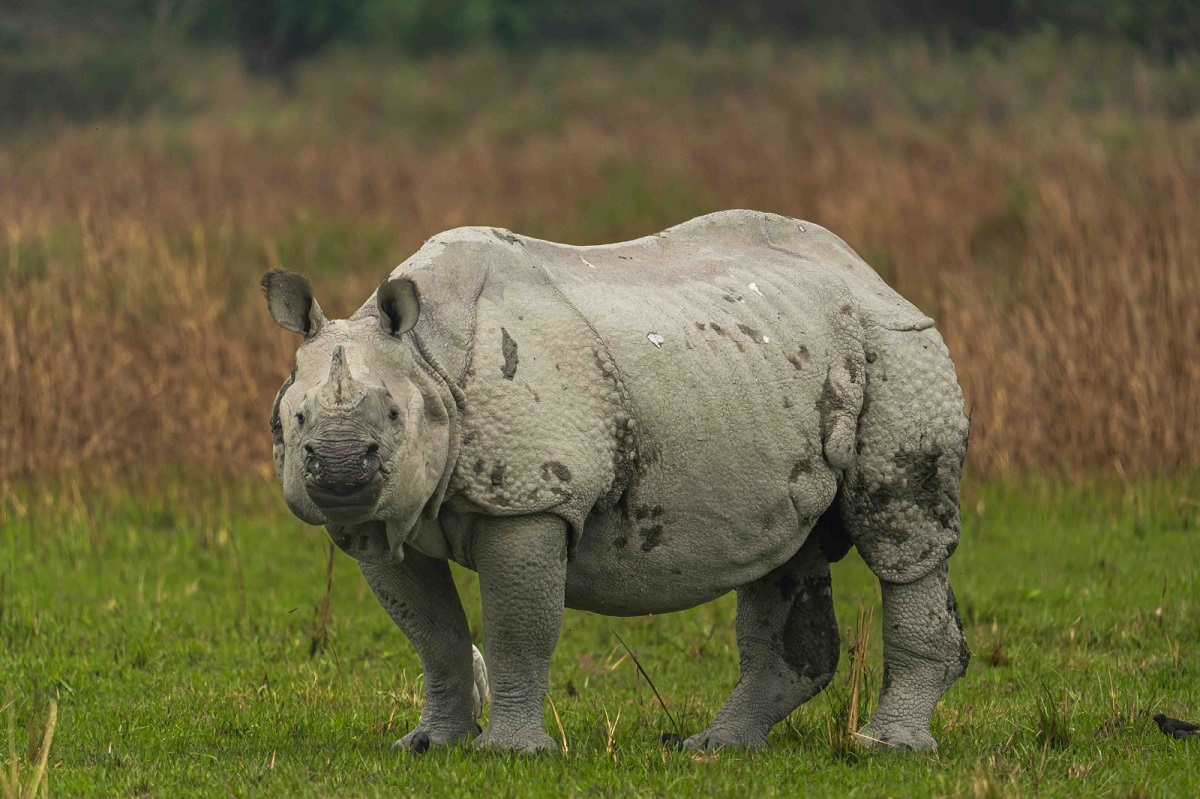
The Indian one-horned rhinoceros migrated to Northeast India from the western and northern parts of the country during the late Holocene period, driven by climate change and increasing human activity, according to a new study on Kaziranga National Park.
The research, which traces the palaeoecological and palaeoherbivory history of Kaziranga, indicates that environmental degradation in western and northern India forced large herbivores to move eastward in search of more suitable habitats. During this time, Northeast India offered relatively stable climatic conditions and abundant resources.
Scientists noted that the Holocene epoch represents the most recent geological period, covering roughly the past 4,000–5,000 years. The study suggests that one-horned rhinos were once widely distributed across northern India, particularly along the Himalayan foothills, with their range extending into present-day Pakistan and Afghanistan.
Findings show that around 3,200–3,300 years ago, the Kaziranga region evolved into a grassland-dominated ecosystem ideal for mega-herbivores such as rhinos. However, significant ecological changes occurred about 1,700 years ago, marked by shrinking grasslands and increasing deciduous forest cover.
The study was led by Dr Sadan Kumar Basumatary and involved researchers from multiple national and international institutions, including the Birbal Sahni Institute of Palaeosciences, the University of Lucknow, Newcastle University in the UK, the University of Denver in the US, and the Botanical Survey of India. The findings have been published in the international journal CATENA.
Researchers also warned that present-day threats, such as the spread of invasive plant species like Mimosa, could disrupt Kaziranga’s fragile ecosystem and pose risks to the long-term survival of the one-horned rhinoceros.
Experts said the study provides important insights into long-term ecological change and could help inform conservation strategies for Kaziranga National Park, a UNESCO World Heritage Site.